Academics
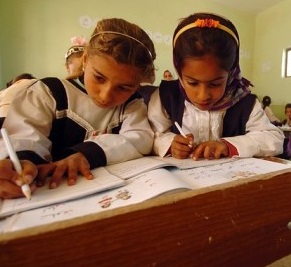
Working together to Learn
A teaching strategy called cooperative learning places students in pairs or small groups and gives them a job to complete. How well a pair or group works together determines whether a task will be completed successfully. Through this teaching approach, students learn to respect one another and to appreciate one another's interests, abilities, and needs. Furthermore, by giving them plenty of opportunities to express and discuss their individual worries, feelings, and views, it encourages students to take charge of their own educational experience. Cooperative learning group exercises are designed to involve the whole group and require more than one individual to complete. The instructor should keep an eye on group activities and step in when necessary to explain directions and show respect for one another.
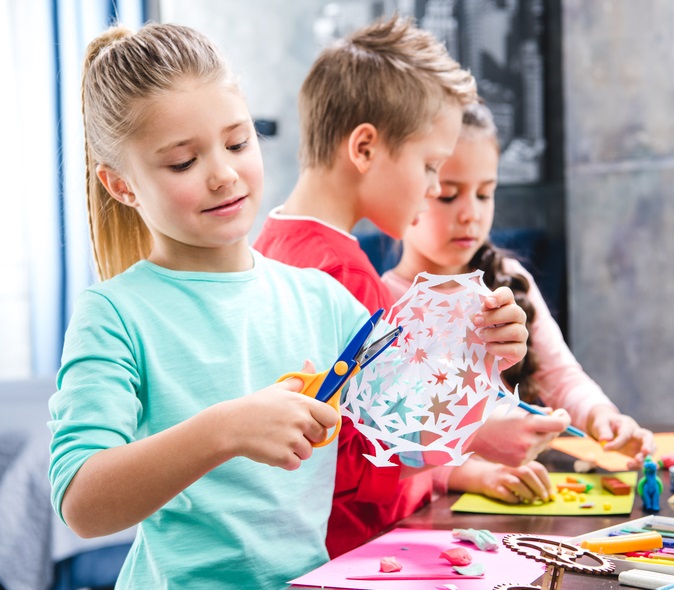
Hands-On Approach
The hands-on method of instruction encourages kids to learn by doing and by observation of others. Students can learn about difficult topics, improve their critical thinking skills, and find solutions to issues by using props. Children have a natural curiosity about the world. Encourage this interest by engaging in practical science activities. For example, We teach children about animals and their ecosystems using puppets or miniature animal toys and Board games are used to teach kids about fundamental mathematical ideas like addition and subtraction. When students are encouraged to study a concept through an educational game or in an interactive multimedia format, computers can also be used to facilitate hands-on learning. Students are further encouraged to take an active role in their education.

The Play Technique
The ideal kindergarten classroom is a secure setting that offers plenty of opportunities for play, which helps kids build confidence and social skills. Observation comes first when using play as a teaching strategy, after which the instructor can shape the play. The best way for teachers to do this is to participate in the play with the kids while also giving ideas and resources that will assist turn the play into a learning experience. As an example, the teacher should knock on the door, ask to join, seat at the table, and sip fictitious tea if children are playing and having an imaginary tea party. When the teacher asks questions about the food being given, provides new vocabulary, adds concepts, and the play is extended.
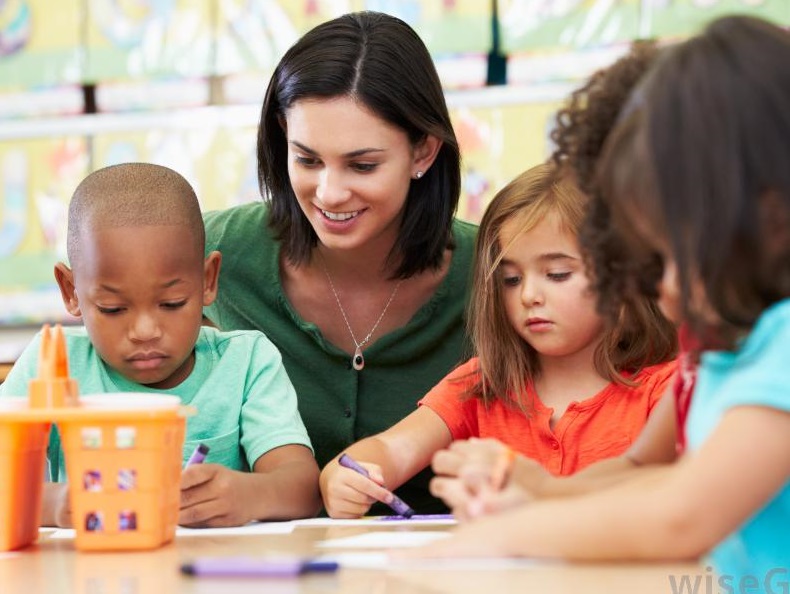
Learning from conferences
A conference learning approach of teaching allows for one-on-one interaction between the teacher and each student. The best time to do this is when the other kids are playing or participating in an activity. Each student should have a meeting with the teacher to know their challenges, achievement, and interests. A teacher may more effectively modify classes, activities, and homework assignments by having these mini-conferences with students to learn about their interests and strengths. Conferences should be held periodically throughout the year to stay on track and receive status reports that outline next steps. Additionally, conferences can happen while kids are still in class if a teacher asks each student a thoughtful question about their work and encourages them to discuss how they approached the assignment.